stars

Welcome my dear friends. Enjoy your visit and share your thoughts. Thank you, much love

Wednesday, 16 December 2015

Visit me at http://tinyurl.com/cindyopenhouse G+ community

New York Times

Hi, dear friends and followers. This entry is about, do you believe in Santa Clause? The same as asking, Do you believe in the unseen? Please read on and decide for yourself. 

Yes, Virginia, a Thousand Times YesBy THOMAS VINCIGUERRA
Published: September 21, 1997

IT was exactly 100 years ago today when The New York Sun responded to the plaintive inquiry of Virginia O'Hanlon, an 8-year-old whose ''little friends'' had told her the unthinkable when she returned to school that fall. ''Please tell me the truth,'' Virginia wrote at the urging of her father, a New York City police surgeon and deputy coroner. ''Is there a Santa Claus?''

For all who are pure of heart, ''Yes, Virginia, there is a Santa Claus'' has been the only possible answer since Sept. 21, 1897, when the world learned something about the power of journalism and of the human capacity to believe.
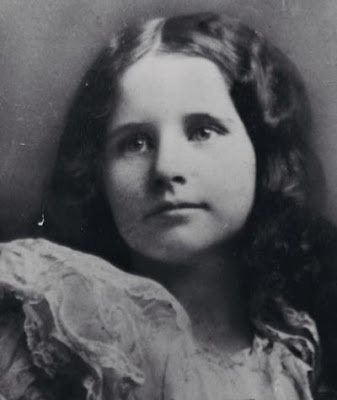
Just try to quote from any other newspaper editorial. The endurance of ''Is There a Santa Claus?'' seems to suggest that what most readers of editorial pages care about most are ruminations on singular subjects like blizzards or the death of a princess. For such observations can constitute a national gathering of sorts, validating emotions that people want to share but can't quite express.

'' 'Yes, Virginia' is the ultimate feel-good editorial,'' said John Tebbel, a former chairman of the New York University journalism department. But ''Yes, Virginia'' -- both the phrase and the editorial -- resonates beyond Dec. 25. Translated into some 20 languages and even set to music, the editorial somehow evokes a universal recognition of mystical affirmation, be it of the painfully obvious or the painfully remote.

The author was Francis Pharcellus Church, a sardonic Columbia College graduate and a veteran writer at The Sun, a popular daily notable in those days for its lively writing and human interest features. Mr. Church, whose personal motto was ''Endeavor to clear your mind of cant,'' reportedly ''bristled and pooh-poohed'' when his editor, Edward P. Mitchell, handed him Virginia's letter and asked him to reply. Yet Mr. Church produced a masterpiece -- under deadline, and in fewer than 500 words.

Viewed critically, Mr. Church's magnum opus is a sentimental mix of tautology, syllogism and fantasy. ''If I saw it cold,'' said the author's cousin, Richard Church Thompson of Gaithersburg, Md., ''my temptation would be to shorten it up. Every time I read it, I get hung up on the word 'supernal.' '' (It means heavenly, by the way.)

But it is precisely because ''Yes, Virginia'' does not bear close scrutiny that it is a true sleight of rhetorical hand -- and, therefore, magical. ''What this child is doing is knocking on the door of the adult world and asking to be let in,'' said Howell Raines, editor of the editorial page of The New York Times. ''And what this editor is doing is protecting her -- and his adult readers.''

William David Sloan, a journalism professor at the University of Arkansas, once put it this way in The Masthead, the journal of the National Conference of Editorial Writers: ''Had he denied Santa Claus, he might have torn down the fanciful world of many youngsters and tampered with the values and traditions many people consider important. Had he affirmed Santa Claus matter-of-factly, he would have contributed no ideas of lasting significance. What Church did was sustain a child's hope while giving her a statement of ideals that are worthwhile for the adult. He did not simply continue a myth. He gave a reason for believing.''

The historian Stephen Nissenbaum thinks ''Yes, Virginia'' is concerned not so much with faith in Santa Claus as with faith in faith. ''The late 19th century was a period of vexing religious doubt for many middle-class Americans,'' Mr. Nissenbaum wrote in ''The Battle for Christmas'' (Knopf, 1996), ''and one characteristic solution was to think that God must exist simply because people so badly needed Him to.'' When Mr. Church referred to ''the skepticism of a skeptical age,'' Mr. Nissenbaum said in an interview, he was speaking to grown-ups.

''Yes, Virginia'' has, of course, outlived its two principals (Mr. Church died in 1906, Virginia in 1971). Come Christmastime, however, the Century Club in Manhattan, of which Mr. Church was a member, and the Gannett Newseum in Rosslyn, Va., will offer retrospective displays.

Could ''Yes, Virginia'' be written today? Yes, said Stephen Simurda, a journalism professor at the University of Massachusetts in Amherst, but ''whether anyone would notice it, sadly, I doubt it. Unless someone bought the rights and made a TV movie.''

Bob Haiman, president emeritus of the Poynter Institute for Media Studies in St. Petersburg, Fla., and the chairman of the 1997 Pulitzer Prize jury for editorial writing, said: ''Do you suppose there are any 8-year-olds left in America who still believe in Santa Claus? One can only hope. And after all, hope is what good editorial pages are all about.''

Dear Editor -- I am 8 years old. Some of my little friends say there is no Santa Claus. Papa says ''If you see it in The Sun it's so.'' Please tell me the truth, is there a Santa Claus?

--Virginia O'Hanlon, 115 West 95th Street

Virginia, your little friends are wrong. They have been affected by the skepticism of a skeptical age. They do not believe except what they see. They think that nothing can be which is not comprehensible by their little minds. All minds, Virginia, whether they be men's or children's, are little. In this great universe of ours, man is a mere insect, an ant, in his intellect, as compared with the boundless world about him, as measured by the intelligence capable of grasping the whole of truth and knowledge.

Yes, Virginia, there is a Santa Claus. He exists as certainly as love and generosity and devotion exist, and you know that they abound and give to your life its highest beauty and joy. Alas! how dreary would be the world if there were no Santa Claus! It would be as dreary as if there were no Virginias. There would be no childlike faith then, no poetry, no romance to make tolerable this existence. We should have no enjoyment, except in sense and sight. The eternal light with which childhood fills the world would be extinguished.

Not believe in Santa Claus! You might as well not believe in fairies! You might get your papa to hire men to watch in all the chimneys on Christmas Eve to catch Santa Claus, but even if they did not see Santa Claus coming down, what would that prove? Nobody sees Santa Claus, but that is no sign that there is no Santa Claus. The most real things in the world are those that neither children nor men can see. Did you ever see fairies dancing on the lawn? Of course not, but that's no proof that they are not there. Nobody can conceive or imagine all the wonders there are unseen and unseeable in the world.

You tear apart the baby's rattle and see what makes the noise inside, but there is a veil covering the unseen world which not the strongest man, nor even the united strength of all the strongest men that ever lived, could tear apart. Only faith, fancy, poetry, love, romance, can push aside that curtain and view and picture the supernal beauty and glory beyond. Is it all real? Ah, Virginia, in all this world there is nothing else real and abiding.

No Santa Claus! Thank God! he lives, and he lives forever. A thousand years from now, Virginia, nay, ten times ten thousand years from now, he will continue to make glad the heart of childhood.

Thank you very much again, dear friends, for visiting my blog. Please share your thoughts with us, if you will. Have a great day. 


✿ڰۣ❤In Loving Light from the Fairy Lady❤ڰۣ✿

Yes, Virginia, a Thousand Times Yes


New York Times

Hi, dear friends and followers. This entry is about, do you believe in Santa Clause? The same as asking, Do you believe in the unseen? Please read on and decide for yourself. 

Yes, Virginia, a Thousand Times YesBy THOMAS VINCIGUERRA
Published: September 21, 1997


IT was exactly 100 years ago today when The New York Sun responded to the plaintive inquiry of Virginia O'Hanlon, an 8-year-old whose ''little friends'' had told her the unthinkable when she returned to school that fall. ''Please tell me the truth,'' Virginia wrote at the urging of her father, a New York City police surgeon and deputy coroner. ''Is there a Santa Claus?''

For all who are pure of heart, ''Yes, Virginia, there is a Santa Claus'' has been the only possible answer since Sept. 21, 1897, when the world learned something about the power of journalism and of the human capacity to believe.

Just try to quote from any other newspaper editorial. The endurance of ''Is There a Santa Claus?'' seems to suggest that what most readers of editorial pages care about most are ruminations on singular subjects like blizzards or the death of a princess. For such observations can constitute a national gathering of sorts, validating emotions that people want to share but can't quite express.

'' 'Yes, Virginia' is the ultimate feel-good editorial,'' said John Tebbel, a former chairman of the New York University journalism department. But ''Yes, Virginia'' -- both the phrase and the editorial -- resonates beyond Dec. 25. Translated into some 20 languages and even set to music, the editorial somehow evokes a universal recognition of mystical affirmation, be it of the painfully obvious or the painfully remote.

The author was Francis Pharcellus Church, a sardonic Columbia College graduate and a veteran writer at The Sun, a popular daily notable in those days for its lively writing and human interest features. Mr. Church, whose personal motto was ''Endeavor to clear your mind of cant,'' reportedly ''bristled and pooh-poohed'' when his editor, Edward P. Mitchell, handed him Virginia's letter and asked him to reply. Yet Mr. Church produced a masterpiece -- under deadline, and in fewer than 500 words.

Viewed critically, Mr. Church's magnum opus is a sentimental mix of tautology, syllogism and fantasy. ''If I saw it cold,'' said the author's cousin, Richard Church Thompson of Gaithersburg, Md., ''my temptation would be to shorten it up. Every time I read it, I get hung up on the word 'supernal.' '' (It means heavenly, by the way.)

But it is precisely because ''Yes, Virginia'' does not bear close scrutiny that it is a true sleight of rhetorical hand -- and, therefore, magical. ''What this child is doing is knocking on the door of the adult world and asking to be let in,'' said Howell Raines, editor of the editorial page of The New York Times. ''And what this editor is doing is protecting her -- and his adult readers.''

William David Sloan, a journalism professor at the University of Arkansas, once put it this way in The Masthead, the journal of the National Conference of Editorial Writers: ''Had he denied Santa Claus, he might have torn down the fanciful world of many youngsters and tampered with the values and traditions many people consider important. Had he affirmed Santa Claus matter-of-factly, he would have contributed no ideas of lasting significance. What Church did was sustain a child's hope while giving her a statement of ideals that are worthwhile for the adult. He did not simply continue a myth. He gave a reason for believing.''

The historian Stephen Nissenbaum thinks ''Yes, Virginia'' is concerned not so much with faith in Santa Claus as with faith in faith. ''The late 19th century was a period of vexing religious doubt for many middle-class Americans,'' Mr. Nissenbaum wrote in ''The Battle for Christmas'' (Knopf, 1996), ''and one characteristic solution was to think that God must exist simply because people so badly needed Him to.'' When Mr. Church referred to ''the skepticism of a skeptical age,'' Mr. Nissenbaum said in an interview, he was speaking to grown-ups.

''Yes, Virginia'' has, of course, outlived its two principals (Mr. Church died in 1906, Virginia in 1971). Come Christmastime, however, the Century Club in Manhattan, of which Mr. Church was a member, and the Gannett Newseum in Rosslyn, Va., will offer retrospective displays.

Could ''Yes, Virginia'' be written today? Yes, said Stephen Simurda, a journalism professor at the University of Massachusetts in Amherst, but ''whether anyone would notice it, sadly, I doubt it. Unless someone bought the rights and made a TV movie.''

Bob Haiman, president emeritus of the Poynter Institute for Media Studies in St. Petersburg, Fla., and the chairman of the 1997 Pulitzer Prize jury for editorial writing, said: ''Do you suppose there are any 8-year-olds left in America who still believe in Santa Claus? One can only hope. And after all, hope is what good editorial pages are all about.''

Dear Editor -- I am 8 years old. Some of my little friends say there is no Santa Claus. Papa says ''If you see it in The Sun it's so.'' Please tell me the truth, is there a Santa Claus?

--Virginia O'Hanlon, 115 West 95th Street

Virginia, your little friends are wrong. They have been affected by the skepticism of a skeptical age. They do not believe except what they see. They think that nothing can be which is not comprehensible by their little minds. All minds, Virginia, whether they be men's or children's, are little. In this great universe of ours, man is a mere insect, an ant, in his intellect, as compared with the boundless world about him, as measured by the intelligence capable of grasping the whole of truth and knowledge.

Yes, Virginia, there is a Santa Claus. He exists as certainly as love and generosity and devotion exist, and you know that they abound and give to your life its highest beauty and joy. Alas! how dreary would be the world if there were no Santa Claus! It would be as dreary as if there were no Virginias. There would be no childlike faith then, no poetry, no romance to make tolerable this existence. We should have no enjoyment, except in sense and sight. The eternal light with which childhood fills the world would be extinguished.

Not believe in Santa Claus! You might as well not believe in fairies! You might get your papa to hire men to watch in all the chimneys on Christmas Eve to catch Santa Claus, but even if they did not see Santa Claus coming down, what would that prove? Nobody sees Santa Claus, but that is no sign that there is no Santa Claus. The most real things in the world are those that neither children nor men can see. Did you ever see fairies dancing on the lawn? Of course not, but that's no proof that they are not there. Nobody can conceive or imagine all the wonders there are unseen and unseeable in the world.

You tear apart the baby's rattle and see what makes the noise inside, but there is a veil covering the unseen world which not the strongest man, nor even the united strength of all the strongest men that ever lived, could tear apart. Only faith, fancy, poetry, love, romance, can push aside that curtain and view and picture the supernal beauty and glory beyond. Is it all real? Ah, Virginia, in all this world there is nothing else real and abiding.

No Santa Claus! Thank God! he lives, and he lives forever. A thousand years from now, Virginia, nay, ten times ten thousand years from now, he will continue to make glad the heart of childhood.

Thank you very much again, dear friends, for visiting my blog. Please share your thoughts with us, if you will. Have a great day. 
✿ڰۣ❤In Loving Light from the Fairy Lady❤ڰۣ✿


Tuesday, 15 December 2015

THE CHRISTMAS FAIRY OF STRASBURG GERMAN FOLK-TALE


THE CHRISTMAS FAIRY OF STRASBURG GERMAN FOLK-TALE
BY J. STIRLING COYNE (ADAPTED)

Hi, dear friends and followers. Today I am sharing with you a Christmas fairy tale. I hope you find it interesting, thank you for visiting my blog. Merry Christmas

ONCE, long ago, there lived near the ancient city of Strasburg, on the river Rhine, a young and handsome count, whose name was Otto. As the years flew by he remained unwed, and never so much as cast a glance at the fair maidens of the country round; for this reason, people began to call him "Stone-Heart."

It chanced that Count Otto, on one Christmas Eve, ordered that a great hunt should take place in the forest surrounding his castle. He and his guests and his many retainers rode forth, and the chase became more and more exciting. It led through thickets, and over pathless tracts of forest until at length Count Otto found himself separated from his companions.

He rode on by himself until he came to a spring of clear, bubbling water, known to the people around as the "Fairy Well." Here Count Otto dismounted. He bent over the spring and began to wash his hands in the sparkling tide, but to his wonder, he found that though the weather was cold and frosty, the water was warm and delightfully caressing. He felt a glow of joy pass through his veins, and, as he plunged his hands deeper, he fancied that his right hand was grasped by another, soft and small, which gently slipped from his finger the gold ring he always wore. And, lo! when he drew out his hand, the gold ring was gone.

Full of wonder at this mysterious event, the count mounted his horse and returned to his castle, resolving in his mind that the very next day he would have the Fairy Well emptied by his servants.

He retired to his room, and, throwing himself just as he was upon his couch, tried to sleep; but the strangeness of the adventure kept him restless and wakeful.

Suddenly he heard the hoarse baying of the watch-hounds in the courtyard, and then the creaking of the drawbridge, as though it were being lowered. Then came to his ear the pattern of many small feet on the stone staircase, and next he heard indistinctly the sound of light footsteps in the chamber adjoining his own.

Count Otto sprang from his couch, and as he did so there sounded a strain of delicious music, and the door of his chamber was flung open. Hurrying into the next room, he found himself in the midst of numberless Fairy beings, clad in gay and sparkling robes. They paid no heed to him, but began to dance, and laugh, and sing, to the sound of mysterious music.

In the center of the apartment stood a splendid Christmas Tree, the first ever seen in that country. Instead, of toys and candles there hung on its lighted boughs diamond stars, pearl necklaces, bracelets of gold ornamented with colored jewels, aigrettes of rubies and sapphires, silken belts embroidered with Oriental pearls, and daggers mounted in gold and studded with the rarest gems. The whole tree swayed, sparkled, and glittered in the radiance of its many lights.

Count Otto stood speechless, gazing at all this wonder, when suddenly the Fairies stopped dancing and fell back, to make room for a lady of dazzling beauty who came slowly toward him.

She wore on her raven-black tresses a golden diadem set with jewels. Her hair flowed down upon a robe of rosy satin and creamy velvet. She stretched out two small, white hands to the count and addressed him in sweet, alluring tones:—

"Dear Count Otto," said she, "I come to return your Christmas visit. I am Ernestine, the Queen of the Fairies. I bring you something you lost in the Fairy Well."

And as she spoke she drew from her bosom a golden casket, set with diamonds, and placed it in his hands. He opened it eagerly and found within his lost gold ring.

Carried away by the wonder of it all, and overcome by an irresistible impulse, the count pressed the Fairy Ernestine to his heart, while she, holding him by the hand, drew him into the magic mazes of the dance. The mysterious music floated through the room, and the rest of that Fairy company circled and whirled around the Fairy Queen and Count Otto, and then gradually dissolved into a mist of many colors, leaving the count and his beautiful guest alone.

Then the young man, forgetting all his former coldness toward the maidens of the country round about, fell on his knees before the Fairy and besought her to become his bride. At last, she consented on the condition that he should never speak the word "death" in her presence.

The next day the wedding of Count Otto and Ernestine, Queen of the Fairies, was celebrated with great pomp and magnificence, and the two continued to live happily for many years.

Now it happened on a time, that the count and his Fairy wife were to hunt in the forest around the castle. The horses were saddled and bridled, and standing at the door, the company waited, and the count paced the hall in great impatience; but still the Fairy Ernestine tarried long in her chamber. At length she appeared at the door of the hall, and the count addressed her in anger.

"You have kept us waiting so long," he cried, "that you would make a good messenger to send for Death!"

Scarcely had he spoken the forbidden and fatal word, when the Fairy, uttering a wild cry, vanished from his sight. In vain Count Otto, overwhelmed with grief and remorse, searched the castle and the Fairy Well, no trace could he find of his beautiful, lost wife but the imprint of her delicate hand set in the stone arch above the castle gate.

Years passed by, and the Fairy Ernestine did not return. The count continued to grieve.  Every Christmas Eve he set up a lighted tree in the room where he had first met the Fairy, hoping in vain that she would return to him.

Time passed and the count died. The castle fell into ruins. But to this day may be seen above the massive gate, deeply sunken in the stone arch, the impress of a small and delicate hand.

And such, say the good folk of Strasburg, was 
the origin of the Christmas Tree.

Thank you very much again, dear friends, for visiting my blog. Please share your thoughts with us, if you will. Have a great day. 

✿ڰۣ❤In Loving Light from the Fairy Lady❤ڰۣ✿


Monday, 14 December 2015

FAIRYLAND AND REAL LIFE

FAIRYLAND AND REAL LIFE

Hi, dear friends and followers. Today's topic is mostly about lessons in life. I hope you enjoy reading the entry and thank for visiting my blog
Let’s face it: life is complicated. It is full of everything from screw ups, bad luck, failures, and never ending wrong turns. But the biggest part of life is learning how strange it is to be human.
I consider Anodos from George MacDonald’s Phantastes to be a friend of mine (yes, when I read books, I often make friends). Maybe it’s because his wandering through fairyland is a journey much like my own, or maybe I just think we’d get along. After all, he’s good at slaying giants, and I like attacking Titans in the Frontier. Okay, maybe it’s more the journey thing.

Anodos doesn’t mean to go to fairyland; he simply wakes up to the morning sun and there he is. Like him, I open my eyes every morning in a world that might as well be fairyland, for despite my years living in it, I still don’t know my way around completely. 

I have stopped trying to make sense of the world because it will never make sense for as long as it is ruled by fallible unstable human beings. The only way it makes sense to me is what I do my best to do in each day. What can I do today that might help to make a little more sense for me and the people around me? I can only accomplish this, in one place and one person at a time, while living in a fallible world. Just do the best I can do today for I do not know what will happen tomorrow. I might get struck down by a meteorite for all I know. 
The journey is the most important part, and it ought to be remembered.

There is no map to life in these strange lands, not for me, not for Anodos. He doesn’t know where he is going; he journeys vaguely east and follows a river. Somewhere along the way, a seed of wondering is planted in his mind. It doesn’t take long for him to start striving for a life worth living, even in the world of fairy. I can almost hear him ask, “but how?” How in this crazy world of accidents and mistakes do you find something worth doing?

What's your true burn? What is your deepest desire? Once you know that, then don't let anything stop you. Do it! Even if you fail you have succeeded, just for having honestly tried. I know I have repeated this statement many times in my entries, but it is the most important lesson that I have learned in my life which helped to balance my self-esteem and worthiness. Even if I missed the boat on all opportunities that came my way, I am still a winner for having tried

How often I have wished I could meet one of the wise old women of the fairies, who would tell me exactly what I need to do that is worth my time. How often have I thought I would pursue a worthy thing if only I could find it.

Anodos does find it though. He ends up meeting two brothers, who take him in. Together they go to slay some giants that were terrorizing some townsfolk. Perhaps this is it, Anodos’ moment; the mission his life was building up to. This is the deed that will somehow make his life worthwhile.

Somehow I thought slaying giants would usher in some happy ending for him, 
and everything would work out well. But no. The brothers die and Anodos lives, becoming a hero of the kingdom. But there isn’t a happy ever after. He wanders on.

Have you heard the saying, be careful what you wish for? Well sometimes you end up finding out what you got was not really what you wanted. Or the novelty wears off and it becomes more of a burden than something beneficial. I only just pray for each day to bring me whatever joy I can get from it, Life is getting shorter and I do not any longer have time to waste on yesterday's dramas and other negative trivialities. I count my blessing and move on and share them with others who might be interested in hearing them

I think this is why I love Anodos’ story so much. He meets more successes and failures along his journey, just like I do.

Past failures creep back into his life, just like they have mine. At a low moment for him, a shadow that had stalked him since his first steps in fairyland returns. It is stronger than ever now, and it imprisons him.

While jailed, Anodos suffers much. He finds himself tired, alone and without hope. Eventually, he is freed, saved by a beautiful song sung by a woman he had wronged ages ago. He is free, but he is a broken man; in that moment, he asks for and is granted forgiveness and reconciliation.

Somehow I thought slaying giants would usher in some happy ending for him.
Leaving those words, he reflects on all his wandering thus far, how he has changed and how he has not. “Self will come to life even in the slaying of self; but there is ever something deeper and stronger than it, which will emerge at last from the unknown abysses of the soul” (Phantastes 169).

Is this life? A constant losing and finding of self, till somehow the idea of a true self-emerges through the ashes, purified by the fires of success and failure? Will it be the same for me? That somehow, after all, this is over I will see how it makes sense though it all seems like nonsense right now?

It does, and so it will continue to appear like that in a world of such chaos as ours appears to be in at this time. As I have mentioned above, alone we can't save the world, but we can help it along in it's healing one person at a time. Your very own fairy world is no further that in your own heart. You build it piece by piece every day of your life. Just need to meditate and reflect back and you will see fairyland was there all the time
Anodos reminds me of myself. There is that fumbling uncertainty, that trying to do something worth doing, that repetition of mistakes. Yet somehow the fires of success and failure act as a purifying agent so that the unknown abysses of the soul can come forth.

The last chapters of Phantastes record Anodos’ death. The introductory quote to this chapter, written by Novalis, leaves me wondering. “Our life is no dream, but it ought to become one and perhaps will.” When I die, will this life feel like a dream? I hope not, because as confusing as it is, the journey is the most important part, and it ought to be remembered.
Thank you very much again, dear friends, for visiting my blog. Please share your thoughts with us, if you will. Have a great day. 
✿ڰۣ❤In Loving Light from the Fairy Lady❤ڰۣ✿


Sunday, 13 December 2015

Mystic Encounters Part 2

Mystic Encounters Part 2


Hi, dear friends and followers. Today I would like to share with you part 2 of Mystic encounters. I have shaded in red what I have had personal experience with. The text in orange are my own comments. Thank you very much for coming


8) Materialization and De-materialization -
These count as mystic encounters because they are out of the scope of everyday occurrence. This is when objects or beings appear in 3D physical form and/or they disappear just as mysteriously.

Apports are one of such phenomena. I was introduced to the term through spiritualism. Mediums would hold seances in which Spirit would supposedly materialize stones and trinkets in physical form to give to attendees. Some were so confident that they would advertise their seance to be an 'apport seance'. This, of course, would raise the expectation of a participant to receive such a gift from the spirit world.

I, in my skepticism, would discount the legitimacy of such seances, questioning how a medium could possibly ensure that every participant (or even some of them) receive an apport at every session. I have other issues with staged phenomena which I will discuss later.

I have had personal experiences with apports and de-materialization. My first occurred in my 20's. I had a bag of stones that I called my medicine bag. Being a rockhound, these particular stones were special to me. I kept them in a special place in my apartment. I would take them out weekly, if not more, to look at, feel and talk to. Being into numerology, I had a certain number of stones. Each one was different and had a different meaning to me.

One day I got them out and found that my piece of jade was gone. I was stunned. I knew no one could have taken it, I lived alone except for my little daughter who could not have found nor reached the bag (even if she could have, she'd have the whole bag out) and no one was ever there without me AND they were hidden. I was bummed and dumbfounded. I could only think that one of my spirit friends took it. I asked for it back and put them away.

Over the next month, I checked and rechecked with no luck. Then one day, my jade had returned to its place in my bag. I suppose it took a little journey and then re-materialized.

Sometimes this phenomena occurs right under our noses and we're not aware of it. Misplaced items resurface where they once were with no reasonable explanation.

Beings that haven't come to Earth in the normal way, have also been known to come and go in this physical plane. They are in full 3D form and can walk and talk like the rest of us, then instantly, they're gone.
I have done that lots of times when I was with people I didn't want to be with.  Like, just stand there perfectly sill and they walk right past me and not see me.

But then I appear to be invisible to most people most of the time anyway, which I don't mind. I can also make thing disappear if I stare at it for a while it goes transparent,  then reappears. I mean transparent enough to see what's behind it.

9) Transfiguration -

This term signifies an image or features that are transposed over another. People have often experienced this by staring into a mirror. The face seems to change and images of other faces seem to appear. There are several theories about these phenomena from illusion to past life personas to a mirror being a portal to other dimensions. This is one aspect of the term.

I have had this experience as well, I am not certain how much of reality to put on this phenomena but it strange. enough so to leave goose bumps all over me. 
Another is that the features of a person you are looking at changes right before your eyes. In these mystic encounters, spirit is being transposed over or onto another person; or a psychic vision of the person viewing the transfiguration is occurring.

A few incidences stand out in my mind from my own experience. My Grandmother was a trance medium. We sometimes had family seances in her basement. Being young with not much experience, I was VERY skeptical.

She contended in her work that anything done in the dark can also be done in the light. So she would have candlelit sessions. I was sitting across from her this particular time with a coffee table between us. I had my eyes closed because we always began with prayer and meditation.

Suddenly I heard her voice change to her "joy guide". I opened my eyes and saw that her face had transformed into that of a little girl! Her eyes were bright, shiny and round. She had a big, happy, childlike smile. Her whole appearance and demeanor was youthful. She was looking directly at me when I opened my eyes. I freaked at her looks and closed my eyes. That was my first noted experience.

Casandra, That is the name of the little girl ghost that I came in contact with when I was 9 years old. Almost every night we could hear odd sounds in the basement, actually, it started in the root cellar before we had a basement. Anyway my first contact with her was the night when I was 9 years old. There was a crashing sound, like someone dropped one of those one-gallon glass mason jars on the floor. I went down carrying my dad's 22 riffle. Nothing, no broken glass, nothing.

A few weeks later another loud sound that woke up everyone in the house. It sounded like a very large boulder had been dropped on the roof. Well all went out and looked around, there was nothing. It just seemed that these occurrences were becoming more frequent and loud as time passed. Until one night I went down to the recreation room and I was just sitting on the floor playing with playing cards when I hear a sound behind me. It sounded like when someone steps down hard on a tin can. Somehow I knew what and who made the  sound. I just proceeded to play with the playing cards and said, you are welcome to sit and play cards with me if you wish Casandra. She remained with me from that day, no matter where I moved, from west coast to east coast of both Canada and the US.
I have more stories about her here in this blog if you are interested. 

A more recent time was early in my relationship with my current husband. We were getting to know each other by extended periods of talking. One night I was surprised to see that his face, gestures and sound, kept changing into those of other men in my past. I saw friends, family members, as well as intimate partners transposed over him. It was as if he was them. I couldn't concentrate on his words anymore, all I noticed was one person after another, showing their image over him. It upset me.

I talked to a fellow minister about it. My worry was that the qualities of these others were embodied in him. A BIG turn off. My friend suggested a more acceptable interpretation, that it represented more the ending of one cycle and its cumulative energies than a continuance. I felt relieved by that and moved forward with the relationship. I'm glad I asked for an 'outside' opinion.

10) Psychometry -

This is when you see images and feel impressions from objects. This is a method of giving "readings". An Intuitive holds a personal item of the person they're reading for to receive info. A personal item carries the energetic imprint of a person, especially an item that is worn by the person alot (ring, watch, etc.) or something that has been with a person for a long time.
  
Yes, I do believe this is true. It is much the same as when someone has left you. The best suggestion I can make is to clean house. I mean everything that doesn't belong to you goes out to the curb. That is the only way and best way to get rid of any residual negative energy from that individual.

Mush the same as wen you have a deceased partner for the exception of a few special objects, like for instance a picture album

11) Automatic Writing -

Mystic encounters that involve the receipt of information through the medium of writing...some say that the hand is guided without their conscious involvement. A more common form is "inspirational" writing. This is when you are basically taking dictation from a disembodied or other dimensional source. The writing just flows from a stream of thought that is projected into your consciousness. More on that later.

12) Psychic Art -


There are many forms of this activity from doodling (without conscious effort), to seeing images transposed onto paper or another medium, to perceiving clairvoyant images, then drawing or painting them.
This is pretty much a proven fact. Many police agencies employed such individuals in crime investigations. 
I have known some gifted psychic artists. When they give an image to a person, usually with a message, the receiving person confirms the relevance of the subject matter and the message as it pertains to them personally.

13 Instantaneous Healing -

The importance of mystic encounters is evident here. One of the biggies, a healing that takes place instantly, a miracle. I have witnessed these as have others that I know and respect. The faith and belief of the person receiving the healing is such that it can occur instantly. For most of us, our beliefs and level of acceptance gets in the way. Healing over time is more in line with our expectations. Do not be held back by this, BELIEVE, then receive!
This kind of healings we hear about relatively frequently, like someone dying of cancer then miraculously go into remission. Believe, yes, but believe in yourself that you will get well
14) Astral Projection -

This is when your consciousness leaves your body. This is often reported in stressed situations of the body, i.e., during an accident, heart attack, near-death experience, or sickness. It can also happen in meditation, sometimes it's the goal.

I had a friend that claimed he once 'coughed' himself out of his body. He was very sick. He was lying on his couch during a bad coughing episode, when suddenly he was on the ceiling looking down at himself on the couch. It scared him, he thought he was about to die. He didn't. But now he's a believer!

15) Spirit Journey -

This is related to astral projection and remote viewing. It is a phase of meditation where you disconnect your consciousness from your body to travel to other realms. You will likely have many mystic encounters on a spirit journey. Remember, all realms, including the physical 3D realm, is in the realm of mind, the Great Mind of Creator, therefore, travel to other realms is achievable. This type of journey brings you into contact with other beings as well as other realities. It is not your imagination as some would have you believe.

I have traveled to these other realms either through dreams or imagination. This was where many of my writings were born from.

16) Miracles -

The unexpected and extraordinary events that happen that are above and beyond everyday occurrences. The deluxe of mystic encounters. These are good surprises.

17) UFO & USO Sightings -

...unidentified craft in the skies or beneath the waters that defy known capabilities of the crafts of our race.

I have seen one that I'm certain of. One night, while standing on my back porch, I was watching what I thought was a very high plane. It was moving steadily in a straight direction. Suddenly it flew off quickly at a sharp right angle and disappeared. I was quite surprised because I didn't expect it, but I was already sure of their validity.


I have never seen a UFO but I have often wished I had. 

18) Strange Happenings -

All other mystic encounters fall under this category, unexplained or unconfirmed sightings, experiences and events.
Thank you very much again, dear friends, for visiting my blog. Please share your thoughts with us, if you will. Have a great day. 
✿ڰۣ❤In Loving Light from the Fairy Lady❤ڰۣ✿