stars

Welcome my dear friends. Enjoy your visit and share your thoughts. Thank you, much love

Thursday, 11 December 2014

The Adventures of Dore and Wahre' dua

Hi dear friends and followers 
 

The place that is now the State of Nebraska looks like the crossroads for at least five or six tribes of Native Americans. According to the maps that I have seen, it was occupied by the Yankton and Lakota Sioux, the Ponca, Omaha, Otoe, Kansa, Arapaho, and Cheyenne Peoples. There may have been others that are not listed.

Our selections for today are Otoe legends, some of the adventures of the twins, Dore and Wahre'dua. Their birth is explained in today's bit of folklore. They are supernatural and possess powers and abilities that allow them to do things that exist only in the tallest of tall tales.

Dore and Wahre'dua: These mythical twins, whose mother was killed by a monster, are common to the folklore of many Midwestern and Eastern tribes. They are generally portrayed as heroic monster-slayers in Otoe legends.

Sharp-Elbows (Itopa'hi): A man-eating ogre with spikes on his elbows and faces on both sides of his head.

These tales are from Alanson Skinner's, Traditions of the Iowa Indians (1925). Original storytellers Robert and Julia Small, of the Iowa - Otoe Tribe. Given the age of this work, I believe that the copyright has expired.

The Adventures of Dore and Wahre' dua *********************************

One time a family went out hunting. They camped by themselves in the woods, and while the man ranged the forest hunting for game, the woman, who was pregnant, stayed at home and kept house for him.

One day while her husband was absent a man came to visit her. At first she paid no attention to the stranger, and would not even look at him. The man sat down opposite her and did everything to attract her attention; finally, as he was possessed of magic power, he caused a fire to spring up behind her. "Oh my, there is a fire behind you!" he exclaimed, but the woman reached behind her and put it out with her hands without looking up or speaking.

When her husband came home she told him about her strange visitor, and he said, "You did well. This man has evil power over women. Do not pay any attention to him, and after the fourth visit he will cease to annoy you."

Each day thereafter the stranger visited her and tried in the same manner to frighten the woman with fire, but each time she made him go away without paying him the slightest attention. On the fourth and last day, after the man had left the lodge, the woman could not resist the temptation to see him before he vanished forever, so she peeped through a crack to see what manner of being he was. Although his back was turned, for he was going away, she saw that he had two faces, one in front and one in the back of his head, and that he had long sharp bones like daggers projecting from his elbows. He was Sharp Elbows (Itopa'hi).

The being saw the woman with his rear face, and laughed and said "I knew you would finally look." He retraced his steps and stabbed her to death with his sharp elbows and went away leaving her lying there on the floor of the lodge.

When her husband returned he found her lying there still, but upon examination of her body he found her babies were still alive, so he cut her open and took them out. They were twin brothers, and, as he could not raise them both, he kept only one. The other he placed on an old log where the mice came and found him.

The one whom the father kept he raised until he was a small boy. One day when this boy, who was named Dore was playing alone while his father was off hunting, his lost brother the mouse boy, who was named Wahre'dua came to the lodge and sang in a low voice:

"Dore thie anje thato tci wothothotcan najiro, Dore haha, Dore"
(Dore, you've got a father and you eat only dried meat, Dore)
"Mieiku hatuntci ho nyi ma dotasta hajido, Dore haha, Dore"
(I've got a grandmother and I eat only wild beans, Dore)

When the man came home that night, Dore said to him, "Father, this boy comes when you are gone and sings to me."
"Oh, that is your missing brother, I couldn't save you both, so I threw him into an old log, and I guess the mice must have raised him."

Every day the lost brother came and played with Dore. He was strange and wild in his ways, like some animal. He had a good nose, and was able to smell out the enemy. Each day when he arrived he would be very suspicious. "Maybe our father is here," he would say to Dore. Then Dore would turn everything upside down to show his mouse brother that there was no one there. Each night Wahre'dua could smell his father coming and would run off to his home in the log before the man got there. Each time when he ran away Wahre'dua would say to Dore, "Forget", so that his brother would not remember to tell his father that he had been there playing so wildly.

One time Wahre'dua forgot to say "Forget", and Dore remembered and told his father about his daily visitor. "Good", said the father. "Tomorrow try to coax him to stay." But Wahre'dua refused and ran off home as usual.

The next day the father hid himself. He said to Dore, "When your brother comes today, play with him for awhile, then say to him, Look for lice in my hair. When he has finished, it will be your turn to louse him; and when you do so, wrap his scalp lock around your finger. When you have a good hold, call for me."
Dore did as he was told, and Wahre'dua was unable to escape when his father ran up. His father cut off Wahre'dua's scalplock, and from that time on the mouse boy had no longer the power to escape.

The two brothers now played together, and after a while both grew in size and stature. One day their father said to them, "Now you must not go to such and such a place, that pond that is near here."

As soon as he was out of sight, Wahre'dua said to Dore, "Father said for us to visit that pond." "Oh no", replied Dore, "He said for us to stay away from it." "Well then," answered Wahre'dua, "if you will not go with me, give me back my scalplock." Dore, it seems, wore Wahre'dua's scalplock attached to his belt, and when his brother demanded it, Dore decided to go with him.
When they arrived at the lake, they found that it was full of leeches. They took off their clothes and waded in until the leeches covered their bodies, then they came out and scraped them off into pieces of bark.

"Our father will be very pleased to see these," said Wahre'dua, so they took them home and cooked and ate some, and they put the rest away for their father to eat when he came back. When the older man returned and they set the leeches before him, however, he refused them and threw them out in disgust.

The next day he ordered the boys not to go to another place in the neighborhood, but as soon as he was gone Wahre'dua said to Dore, "Father said for us to go to that place." "Oh no," answered Dore, "He said for us to stay away from it." "Well then, if you don't want to go with me, give me back my scalplock."

When Wahre'dua said this, Dore decided to accompany him, and when they arrived at the spot they found there a great den of snakes. The twins took four box-turtle shells and made for themselves two pairs of moccasins.

Then they entered the den and trod on the heads of the greatest rattlesnakes and crushed them. They took the biggest ones home as before, and cooked and ate some of them, the rest they set aside for their father.

They also took the biggest rattlesnakes and hung them from a stick over the lodge entrance making a door that jingled when the snake's bodies were pushed aside to enter the lodge. "Our father will be pleased when he sees this," said Wahre'dua.

When their father came home he was frightened and angry. He made the boys tear down the rattling door and throw the cooked snake flesh back where they got it. He scolded them for their disobedience.

Again, the next day, when he was about to set out on his hunt, he warned them against going to a certain place. As soon as he was out of sight however, Wahre'dua said to Dore, "Father said for us to go to that place." "Oh no," answered Dore, "He said for us to stay away from it." "Well then, if you don't want to go with me, give me back my scalplock." So as usual Dore gave in to his more powerful brother, and they went to the forbidden place.

Now it so happened that at this place dwelt the U'ye (the female organ of generation of the world). This U'ye swallowed all manner of animals and people who ventured near it, for it had the ability to suck them down into its maw. When the U'ye saw the two boys approaching, it spoke to them and warned them to keep away from it.

"No matter," said the twins, "Swallow us just as you do everybody else." And they stripped off their clothes until they were naked all but their thong. They hunted for a place where there were many flint rocks, then they lay down and rolled in them, after which they ran up to the U'ye and begged it to swallow them.

The U'ye swallowed them, but immediately, finding them covered with the hard flint rock, it spat them out again, and blew upon them until it blew away all the stones that adhered to their bodies, then it swallowed them again.

As soon as they were in the maw of the U'ye they found themselves in a vast dark place. There were many people and animals there, some dead and digested, some dying, and some newly captured. There was no escape, although they wandered and searched for many days. They asked all the animals and people whom they met, but none had any hope of escape. Dore wept at times and was frightened, but Wahre'dua only laughed.

Finally they searched all over their bodies to see if they could find any flint left there, but none could be discovered until finally Wahre'dua found a little particle under his foreskin. He took it and commanded it to grow in the shape of a flint knife, and such was his magic power that it did so at once.

It is said that this U'ye had a heart, liver and throat, as well as a stomach, so Wahre'dua went to its diaphragm and cut it with his knife. This only tickled the U'ye, but at last he hacked his way through it and cut off the heart.

Then the U'ye died, and all became dark, for it shut its mouth. Then Wahre'dua began to cut a hole out of its side. Through this the twins and all the other living captives escaped. When the U'ye died it shuddered so that all over the earth the fact was known by the earthquake, and everyone knew it was the twins that had done the deed. Since then the world has never had an U'ye.
When the boys got home they found their father was very much frightened by their power.

There are more legends of Dore and Wahre'dua but we will stop here for today.


Thank you so very much for sharing your time with me. Please give me your thoughts about these legends. I'd love to know if they are something that you like. Thanks again.

✿ڰۣ❤In Loving Light from the Fairy Lady❤ڰۣ✿


Wednesday, 10 December 2014

Maggalie and Angor

Hi, dear friend and followers. Well, here we are
Wednesday, half the week gone by already, and time to resume my poem stories.

Maggalie and Angor


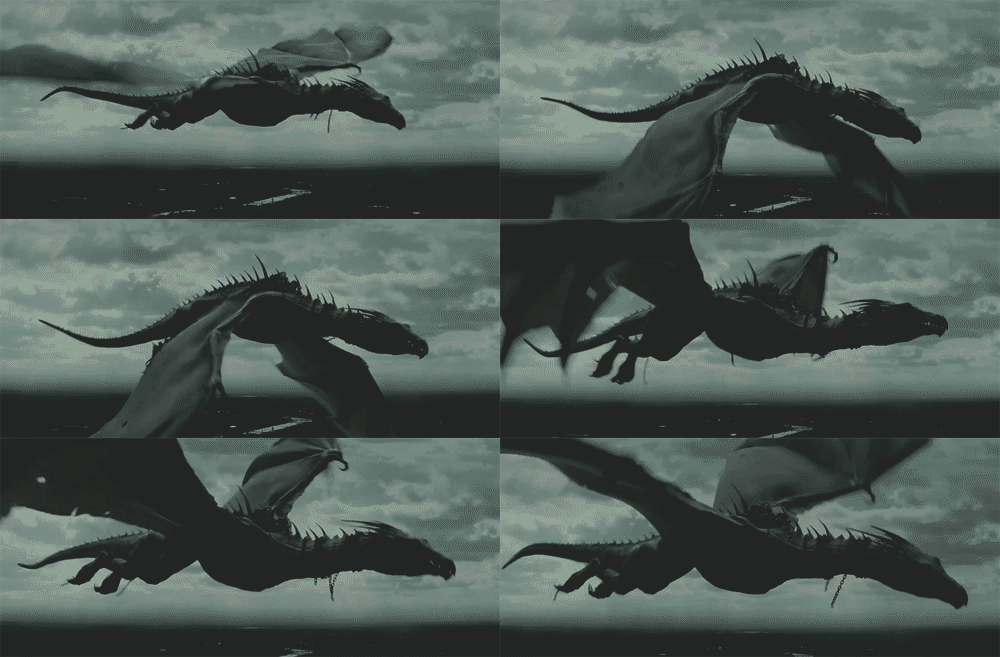
A dragon and a magic spell;
a dragon caught in a whirling cyclone;
from the heavens it falls,
with the grace of a stone.
Being spat out by the furious storm
the dragon sees, as plainly as day,
that his landing on the ground will be hard.
Down in a heap, near the water he lands,
among the thickets and stones at the rivers edge.
A sharp descent, to say the least;
one that would have broken the stoutest of necks
Filled with glee and misery every day,
Dwarves at work and elves at play.
Excitement haunts your every step
when you are in a place not yours.


Dragon scrambles out of the thickets,
somewhat dazed, but still alive.
He stood and roared and billowed flame
to see that he could defend himself.
With a flip through the air,
as light as a lark,
he entered the water;
'neath the current dark.


The dragon resurfaced a distance upstream,
in a peaceful pond that fed into a brook.
He clambered out onto the peaceful bank,
and lay on the green grass, in a hidden nook.
Now they say one can get there
by enchanted dream or magic spell;
but the truth is that there is a Fairy Land
and dragon missed his home he knew so well.
This world was his, to live in and love.
'tis as wicked as hell, nice as heaven above.
He knew that the dream and the spell were out,
and there was one other way to get back to Fairy Land.
He decided to rest before trying his plan.
And sleep he did, until the evening of the day.


"So listen well, and take my advice,"
a tiny voice within him spoke,
"and listen to what I am about to tell you;
and you will be there on the evening of tomorrow."
Upon awakening the dragon looked to the east
for this was the way of his destination;
east to the land of the Faie folk and safety.
he could not stay where he was any longer,
for great harm to him would surely come
in this place so foreign, 
this world between worlds.


He spread his great wings and took two full flaps;
they sounded like air filled sails on a tall, fast ship!
Over the wilderness the dragon flew
out of sight of frightened human eyes.
Came the dusk and he landed
not far from his start,
on a leaf-covered dirt road that was on the way
out of this place, the world between worlds.
A mist arose on the forest floor;
the forest soon became but a silhouette
to either side the leaf-covered road.

It was fast growing into darkness, 
when the dragon stopped and turned to his right,
and quickly disappeared into the forest,
Feeling relieved not to be as exposed,
not as he had been on the open road.
"A forest of mystery and fear," he thought,
"where one's imagination can run wild."
"Cease your movements!" his inner voice told him
"Hark! A sound!" the thought he had heard
The dragon hissed and spread his wings,
and prepared to defend himself as only dragons could.
Then he said, in a deep growl,
"Show yourself, whoever you are!
Lest I roast you and eat you,
afore the arising of the sun!"
The bushes rustled, and a small form appeared,
dark against the first shades of dawn,
and before him stool, transfixed, not afraid,
by the large form which stood before it.


The dragon's night vision clearly noted,
a girl who looked to be around ten;
her red hair and green eyes accenting her fair face.
If they both had been in Fairy Land,
he would not have known the difference,
between this girl and the others of her kind.
"Where do you come from, child?" the dragon asked 
in a deep voice, mellow compared to its initial growl.
The child was startled by the dragons tone;
she stepped back a couple paces, then stopped.
She knew about dragons, from stories of the faie;
but she did not know that they could talk.
The bright amber eyes of the dragon softened
and ceased to glare downward as he looked at the child.
"Where are you from, child?" he asked again,
in a softer voice, to allay her fears.
The girl dropped the hood of her fur-trimmed cape;
to the dragon she spoke in so tiny a voice:
"I am from here. I live here. This is home, my home."
"How long have you lived here?" the dragon replied.
"All of my life, I remember no place else."
"You have not gone with the others. Why?" he said.
She pulled back her hair and showed him why: 
two long pointed ears, as plain as the day.
The dragon, he knew, from whence she came;
Her people lived in the other world,
the Fairy Land that was his destination!
She put her hood back on her head,
then turned and motioned for him to follow.
She led the way as they walked to a steep ravine;
it was lined by a thick forest on both sides.


Upon reaching the bottom of the ravine,
there lay silhouetted by the morning mist,
what appeared to be a large, grassy mound.
To the eastern side of the hillock she stood,
to open a door which a moment ago,
was invisible to the unknowing eye.
Inside was space for a dragon to fit;
At the center, a hearth kept the chills at bay.
The dragon laid upon the coals with a sigh.
The structure was of sheets of steel,
with wooden walls, as was the floor;
lit well by chandeliers and candelabra
and fragrant oil lamps upon the shelves.
This dwelling, it was furnished complete.


"No doubt that all was built and supplied,
with throw-aways from the human folk," he thought,
Then turned again to look at the child.
She was one of the Elfin, that he knew.
But how long away from her kinfolk was she?
Was she lost in a time between times, like he?
She had no recall of how she got here.
She only knew of the life she had made;
and that it would be a fatal move
to expose herself to the raging humans.


"Would you come with me?" the dragon asked,
as he noticed the child was not so much a child.
She was one of the Fairy folk whose vitality glowed!
Her beauty far brighter than the brightest of stars
on a summer night 'neath the silver moon!
A creature of magic, she was, as he.
Of this world not, where the humans forbid 
enchantment and magic and live in dreary gray.
"What is your name, child, 
or should I say young lady? the dragon queried
in the softest of voices.
The girl stood, dropped her cape, and then to reveal 


a stunning, pale blue dress, floor length, with gold trim;
it was homespun, as all her garments were.
Her brilliant unbraided red hair,
flashed as she lowered her head;
speaking quietly and shyly her name she told:
My name is Maggalie, a name of my choice.
And how shall I call you, my fine dragon?
"Angor. I am a forest dragon," came the reply.
"If there be names for dragons, that it would be."
"I know little of the Fairy Land, Maggalie said.
"I know little of the worlds from this one aside,
save what I have learned from discarded books.
This world you speak of, what is it like? Maggalie asked.
"It is light. All is magic. It is colors, and hues.
If you wish, I would be pleased to take you there.
Maybe that is where you will find your real home," Angor said.
The girl stood silently for a time, to think;
lips pursed, tapping them with her right index finger.
Then she spoke thus: "That would be my delight!"
"I have been lonely for others like me and
I thought that I was the only one left.
I knew I was different from those who live here
and here difference can spell my death."
"Then let us go, my lady! Angor exclaimed.
He stood, fully tall, 
then waved towards the door,
with his right front appendage.
"Yes," she said as she wrapped herself in her fur cape.
Outside she climbed on Angor's back,


then turned and took one final look,
at what had been her only home,
for who knows for how many years past.
Angor gave two huge, jumping leaps
as he beat his great wings and they were aloft.
Maggalie trusted the great beast beneath her.
She slid forward to lay upon his back
and embraced his strong neck 
with her delicate arms,
to the steady beat of the huge wings.
She drifted into a safe, sound sleep.
Through the thick fog, Angor flew.
There were times that he 
could not see land or sky.
He shook himself to awaken
the slumbering Maggalie
and told her to brace for rough going.
No sooner had he finished speaking
than a huge whirlwind came up from below them.
Into it they were drawn like a bug,
into what looked like the eye of a tornado,
Angor fought the winds and stayed aloft.
The eye closed and they were buffeted about
as Maggalie held onto Angor for her life.


Suddenly, again were they were in clear blue sky.
Below she saw that magical place 
where daisies sing songs like little birds.
Between the sun and showers,
the tall grasses sing a melody
about this new world she was now in.
Butterfly flowers are there beside the way.


All about her insects flew;
but they were not insects at all.
All about tiny fairy beings flew.
This place was as Angor described,
a place of light and colors and hues;
all beings spoke to her; 
the plant beings;
the animal beings; 
the bird beings;
the fairy beings;
as well as those of the sea.
Then she saw them,
the woodland beings,
beings like her!
She now knew that after all these years,
she had finally found her home;

the home she could only dream about,
when she lived alone, in the other world.
A handsome Elfin fellow came to her,
and offered his arm for his lady to take.
On his arm, he lead her to the home tree.
Then said to her, Do you not recognize me, Maggalie dear ?
She did not recognize the form, but she knew what dwelt within.

I appreciate your sharing this time with me.  I'm grateful for your thoughts on this poem and everything that I post.  Thanks again and have a great Wednesday!


✿ڰۣ❤In Loving Light from the Fairy Lady❤ڰۣ✿


Tuesday, 9 December 2014

Ponca Tradition of Finding Horses.

Hi dear friends and folloers

The Ponca are a People who occupied territory in northern Nebraska and southern South Dakota. They spoke a Siouan language and were both farmers and hunters. They lived in sod or earthen lodges and used a teepee when on hunting trips.

Their mythology contained some characters familiar to us: A Creator; a trickster who is the fallen son of a deity; the rabbit; the coyote, and the fox. I am sure that there are others, like the crow and the magpie, but I have not researched their place in the legends.


The story that follows is the
Ponca Tradition of Finding Horses.
Long ago, the people followed the Missouri River northward to a place where they could step over the water. Then they turned, and were going across the land. Then they met the Padouca [Comanche].

At that time the Ponca had no animals but dogs to help them carry burdens. Wherever they went they had to go on foot, but the people were strong and fleet. They could run a great distance and not be weary.

One day when they were hunting buffalo, they met the Padouca. Then they had many battles with them. The Padouca were mounted on strange animals. At first the Ponca thought it was all one animal.

The Padouca had bows made from elk horn. They were not very long, nor were they very strong. They boiled the horn until it was soft; then they scraped it, and bound it together with sinews and glue. Their arrows were tipped with bone. They fought also with a stone battle-ax. The handle was a sapling; a grooved stone ax head, pointed at both ends, was fastened to this with rawhides.

So the Padouca were terrible fighters. They protected their horses with a covering of thick rawhide cut in round pieces, and put together like fish scales. They spread glue over the outside and then sand. So when the Comanches fought, the arrows of their enemies glanced off the horses' armor. Then the Padouca made breastplates for themselves like those of the horses.

When the Ponca met these terrible warriors, they were afraid. They thought man and horse were one. They named it "Kawa" because they noticed the odor of the horse. Then they knew by this odor when the Padouca were coming. When a man smelled the horses, he would run to the camp and say, "The wind tells us the Kawa are coming." Then the Ponca would make ready to defend themselves.

The Ponca had many battles with the Comanches. They did not know how to use the animals, so they killed the horses as well as the men. Neither could they find out where the Padouca lived.

One day the two tribes had a great battle. The people fought all day. Sometimes the Ponca were driven back, sometimes the Padouca. Then at last a Ponca shot a Padouca so that he fell from his horse. Then the battle ceased. After this, one of the Padouca came toward the Ponca and said in plain Ponca,

"Who are you? What do you call yourselves?"

The Ponca replied, "We call ourselves Ponca. You speak our language, are you of our tribe?"

The other said, "No. I speak your language as a gift from a Ponca spirit. One day I lay on a Ponca grave after a battle. Then a man rose from the grave and spoke to me. So I know your language."

Then it was agreed to make peace. The tribes visited each other. The Ponca traded their bows and arrows for horses. They knew where the Padouca lived. Then the Padouca taught the Ponca how to ride, and how to put burdens on the horses.

When the Ponca had learned how to ride, and had horses, they went to war again. They attacked the Padouca in their own village. They attacked them so many times and stole so many of their horses that at last the Padouca fled. We do not know where they went. The Ponca followed the Platte River toward the rising sun; then they came back to the Missouri, and they brought their horses with them.

Thank you again for dropping by and taking a few minutes to read the Native American Legends and myths I would appreciate knowing what your thoughts are on it. Have a wonderful week.

✿ڰۣ❤In Loving Light from the Fairy Lady❤ڰۣ✿

Monday, 8 December 2014

Three stories from the Soux

Three stories from the Soux
Hi dear friends and followers.

North Dakota is the ancestral home of more than one Sioux Peoples: the Dakota, Lakota, and Nakota. They are related by language, customs, and political alliances.

The Sioux lived on the Great Plains and were hunters that followed the buffalo and other animals in their annual migrations. This lifestyle made them rather nomadic in comparison to successful farmers, like the Iroquois or the Powhatan, who cultivated the land and hunted or fished when game was in-season.

The stories presented here are taken from Myths and Legends of the Sioux by Marie L. McLaughlin, published in 1916. To the best of my knowledge the copyright of this work has expired.

A brief note concerning the mention of the Arikara People in the first line of the story of the Forgotten Ear of Corn: During the sedentary seasons, the Arikara lived primarily in villages of earth lodges. While traveling or during the seasonal bison hunts, they erected portable tipis as temporary shelter. They were primarily an agricultural society, whose women cultivated varieties of corn (or maize). The crop was such an important staple of their society that it was referred to as "Mother Corn".


THE FORGOTTEN EAR OF CORN

An Arikara woman was once gathering corn from the field to store away for winter use. She passed from stalk to stalk, tearing off the ears and dropping them into her folded robe. When all was gathered she started to go, when she heard a faint voice, like a child's, weeping and calling:

"Oh, do not leave me! Do not go away without me."

The woman was astonished. "What child can that be?" she asked herself. "What babe can be lost in the cornfield?"

She set down her robe in which she had tied up her corn, and went back to search; but she found nothing.

As she started away she heard the voice again:

"Oh, do not leave me. Do not go away without me."

She searched for a long time. At last in one corner of the field, hidden under the leaves of the stalks, she found one little ear of corn. This it was that had been crying, and this is why all Indian women have since garnered their corn crop very carefully, so that the succulent food product should not even to the last small nubbin be neglected or wasted, and thus displease the Great Mystery.


THE LITTLE MICE

Once upon a time a prairie mouse busied herself all fall storing away a cache of beans. Every morning she was out early with her empty cast-off snake skin, which she filled with ground beans and dragged home with her teeth.

The little mouse had a cousin who was fond of dancing and talk, but who did not like to work. She was not careful to get her cache of beans and the season was already well gone before she thought to bestir herself. When she came to realize her need, she found she had no packing bag. So she went to her hardworking cousin and said:

"Cousin, I have no beans stored for winter and the season is nearly gone. But I have no snake skin to gather the beans in. Will you lend me one?"

"But why have you no packing bag? Where were you in the moon when the snakes cast off their skins?"

"I was here."

"What were you doing?"

"I was busy talking and dancing."

"And now you are punished," said the other. "It is always so with lazy, careless people. But I will let you have the snake skin. And now go, and by hard work and industry, try to recover your wasted time."


THE PET RABBIT

A little girl owned a pet rabbit which she loved dearly. She carried it on her back like a babe, made for it a little pair of moccasins, and at night shared with it her own robe.

Now the little girl had a cousin who loved her very dearly and wished to do her honor; so her cousin said to herself:

"I love my little cousin well and will ask her to let me carry her pet rabbit around;" (for thus do Indian women when they wish to honor a friend; they ask permission to carry about the friend's babe).

She then went to the little girl and said:

"Cousin, let me carry your pet rabbit about on my back. Thus shall I show you how I love you."

Her mother, too, said to her: "Oh no, do not let our little grandchild go away from our tepee."

But the cousin answered: "Oh, do let me carry it. I do so want to show my cousin honor." At last they let her go away with the pet rabbit on her back.

When the little girl's cousin came home to her tepee, some rough boys who were playing about began to make sport of her. To tease the little girl they threw stones and sticks at the pet rabbit. At last a stick struck the little rabbit upon the head and killed it.

When her pet was brought home dead, the little rabbit's adopted mother wept bitterly. She cut off her hair for mourning and all her little girl friends wailed with her. Her mother, too, mourned with them.

"Alas!" they cried, "alas, for the little rabbit. He was always kind and gentle. Now your child is dead and you will be lonesome."

The little girl's mother called in her little friends and made a great mourning feast for the little rabbit. As he lay in the tepee his adopted mother's little friends brought many precious things and covered his body. At the feast were given away robes and kettles and blankets and knives and great wealth in honor of the little rabbit. Him they wrapped in a robe with his little moccasins on and buried him in a high place upon a scaffold.

Thank you again for dropping by and taking a few minutes to read the Native American Legends and myths I would appreciate knowing what your thoughts are on it. Thank you and have a wonderful Saturday.

✿ڰۣ❤In Loving Light from the Fairy Lady❤ڰۣ✿


Friday, 5 December 2014

It's Frizzy Lizzy time

Hi dear friends and followers, today is Saturday, Happy Saturday and today is also Frizzy Lizzy day. 

Hi, Judy! How are things with you? Nice of you to drop-in.! Sure, there's coffee, and I have some good fruitcake to share with you. No, not the kind you get at the mall from the Rotary Club. No, I made this in September, just when it started to get cool, and it's been in a rum-soaked towel for 9 weeks. Sort of reminds me of Charley during Christmas party season!

So what do you think of the Christmas lights? No, I didn't get up on a ladder to put them on the rain pipes, Peter Pan was in the neighborhood and he helped out. No, that's not what I call Charley these days.

I must give credit where ti is due. He worked hard to get everything done well. He's like that sometimes. When it comes to grilling a steak over the charcoal, or making a pot of Texas red chili, he's a perfectionist, and this year he surprised me with these Christmas lights. What do you mean, how and what kind of surprise? Let me tell you.

It all started about six years ago on a Saturday in December. It was a day with brilliant sun and a little wind, but it was cold. Colder than a banker's heart. I had just moved into this house and Charley and I wanted to decorate for Christmas. Let me tell you, nothing worked except Charley and I.

We started that morning with something easy. I had a bunch of candy canes to put into the ground along the sidewalk between the street and the front porch. I even got a stop sign that asked Santa Claus to stop at this house because a good girl lives there. Well, I might have well asked to dig the Erie Canal that day.

Charley took the sign and a hammer and he set the sign right where I asked him to set it. He brought the hammer way back and prepared to give the signpost a good whack and he hit it for all he was worth. It was a pointed, wooded stake that the sign was on. Well, you would think that the ground was made out of rubber because that post just bounced off! That ground had frozen just enough to be a pain-in-the-ass! And it broke the end of the signpost, too.

Now Charley could sense my disappointment so he came up with a way to dig a hole: he got a pot of hot water and had me pour it on the ground and moved like a man on fire to start a hole while the ground was soft. Problem solved, The sign went into the ground and we both went into the house for a little drink, me a coffee with Irish cream, and Charlie a shot of Canadian Club.

Now we have all of these plastic candy canes to put along the path. 16 candy canes. 16 little holes, Solidly frozen ground, and Charley warmed by a good belt of 12-year-old whiskey.

He walks over to the path and lays the candy canes on the ground beside the path, spaced so evenly you would think that he measured them with a ruler. So far, so good. Then he walks away to his noisy old diesel truck and starts to rummage through the toolbox. I'm wondering what in the hell is he up to. Is he fixing his truck or lost in space? I hear nothing, not even any cussing, so I go back to my work in the kitchen.

The next thing I hear is this electric motor outside. I go to the window to see a genius at work!

From the toolbox on the back of his truck Charley took the biggest electric drill that I have ever seen and he was kneeling on a pad and drilling holes in the ground, one for each candy cane! I am flabbergasted! He was drilling holes 3 cm deep for each candy cane!

So he gets the holes drilled, sets the candy canes in them, and they are a little loose. I'm thinking to myself, "Well, Charley's a little loose, so what can I expect?" He puts the drill away and comes in the house for another shot of Canadian Club and to warm his hands, which by now are getting stiff.

We're standing by the window, looking at the somewhat-crooked candy canes and I ask Charley if he has a solution. I should have known better. He did. We had a bunch of fat-wood sticks that we used as kindling in the fireplace. He took a handful of them and a hammer and put one in every hole and all of the candy canes stood up straight!

Time for another shot of whiskey for him and a vodka martini for me. After all, it was getting into the afternoon and it surely was cocktail hour somewhere!

The shrubs in front of the house needed lights put on them. Charley had that one figured out perfectly. How that man could come up with such ideas after 3 or 4 shots of whiskey is beyond me. He just took a zip tie and fastened one end to the top corner of the bushes and strung the lights across and down. Now I didn't see anyone else in the house or the yard that day but Lady Luck must have been working outside with him because it only took him an hour or so to get those lights evenly on the bushes. He called me out to look at them as he tested them and they looked like they grew there.

And we had another drink, you know, to fend off the cold, because it was getting into the late afternoon already.

Well, the rest was easier said than done. That wind came up and it froze poor Charley's hands so badly that he could hardly hold onto his tools. No amount of whiskey could fix that. And that was the real test of what that man was made of.

He managed to fasten lights on both of the wrought-iron stair railings and around the front door frame. Then he plugged them into an outlet and put a box on it so it would turn the lights on automatically at sunset and turn them off at midnight! Clever guy, my Charley!

By that time his face was as red as a lobster from being in the cold and the wind and his poor hands could barely close. But I had a cure for him. I had a double shot of Canadian Club ready as soon as he got his jacket off, followed by basin filled with lukewarm water at the kitchen table for his hands. I put a fresh pair of woolly socks on his feet and he sat there like the Prince of Wales while I made him a fresh pot of coffee. Then we enjoyed some beef stew with fresh-baked rolls.

He loved all of the attention. And he deserved it, too. And I was glad to share it with him.

He has his days and his ways, but don't all of us? All things considered, I am lucky to have him in my life. Now his family is a different story, but Charley - he's OK with me.

Thank you again for dropping by and taking a few minutes to read the life and time of Frizzy Lizzy. I would appreciate knowing what your thoughts are on it. Thank you and have a wonderful Saturday.

✿ڰۣ❤In Loving Light from the Fairy Lady❤ڰۣ✿